
Republic of Palestine – Latin America Affairs EditorHavana – February 5, 2026
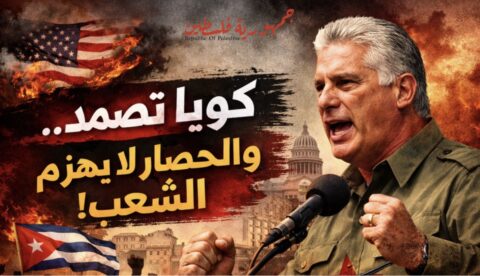
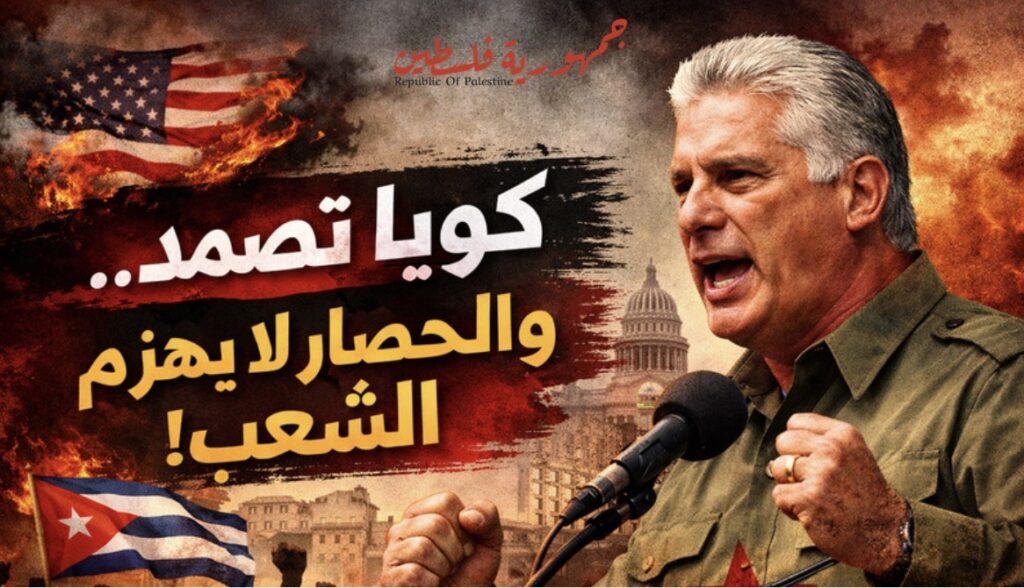
Cuban President Miguel Díaz-Canel announced a series of emergency measures to confront an unprecedented escalation by the United States against Cuba, accusing Washington of attempting to “subjugate the Cuban people through economic blockade and political pressure,” in a new escalation that reflects decades-long tensions between the two countries.
These measures come after the White House declared a national emergency against Cuba and increased threats to countries supplying oil to the island, describing the Cuban regime as a “threat to U.S. national security.” Díaz-Canel emphasized that these policies aim to exacerbate economic and social crises in Cuba, including transportation, energy, and public services, but will not defeat the will of the Cuban people.
Details from President Díaz-Canel’s Press Conference
In a lengthy press conference broadcast on national television, Díaz-Canel outlined several specific measures, including:
- Rationing fuel and energy consumption: Setting weekly quotas for industrial and commercial use, while enhancing public transport and using alternative energy sources where possible.
- Securing essential food reserves: Ensuring fair distribution of basic food items among citizens, with a focus on local production to reduce import dependence.
- Maintaining essential services: Strengthening operational capacity in hospitals, water and electricity networks, and emergency services to minimize impact on citizens.
- Stimulating the local economy and popular initiatives: Encouraging community cooperation, supporting small projects and urban agricultural initiatives to compensate for imported shortages.
- Updating the emergency response plan: Developing scenarios to address potential worsening of fuel or essential goods shortages in the coming months.
The Cuban president stressed that these measures are not only for the current stage but are part of a long-term strategy to face any future economic or political pressure attempts, adding:
“We will face difficult times… but we will overcome them. The Cuban people have long been accustomed to confronting the harshest blockades with creativity and collective resistance.”
Escalation of the Blockade and Regional Implications
Analysts note that the U.S. escalation against Cuba is not isolated from American policy in Latin America but is part of a broader strategy affecting Venezuela, Nicaragua, and other Global South countries, using economic and political pressure to achieve geostrategic goals.
Experts add that these policies exacerbate humanitarian crises, yet they also highlight the ability of targeted countries to innovate and implement popular resistance strategies, as has been seen in Cuba and Venezuela in recent years. Popular resilience has become part of the national and political identity of these nations, making any attempt at expanded economic pressure fraught with challenges and international repercussions.
Amid increasing U.S. pressure, Cuba continues to implement a comprehensive emergency plan, including resource management, strengthening popular resilience, and maintaining essential services, while relations with Washington remain highly tense, with limited possibilities for conditional dialogue. This crisis is not only Cuban but is part of the broader struggle in Latin America and the Global South, where multiple countries face attempts by major powers to impose their will—a situation that makes Cuba’s lessons in resilience a global model for confronting economic and political pressures.
Lee en Español