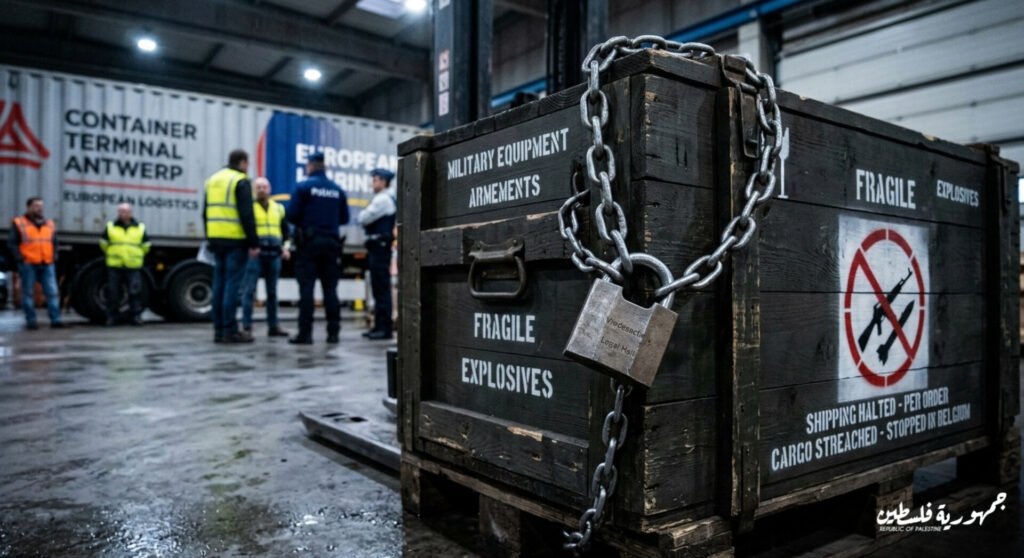

New findings from monitoring organizations in Belgium reveal that a military shipment bound for the Israeli occupation has been halted, following a coordinated cross-border tracking operation that originated in the United Kingdom. The development highlights the growing role of European civil society in exposing and disrupting arms supply chains linked to ongoing Israeli military operations.
According to Vredesactie, a Belgian organization specializing in monitoring the arms trade, the shipment was identified after departing from the UK en route to the Israeli occupation via Belgian territory. The organization worked in coordination with partner groups in Britain to trace the shipment’s trajectory.
The shipment was scheduled to transit through Belgium before continuing toward its final destination. However, legal notifications and sustained monitoring efforts led to its interception and suspension—demonstrating the increasing effectiveness of coordinated rights-based interventions in obstructing military supply routes linked to the Israeli occupation.
Cross-Border Legal Coordination
This intervention comes within the framework of a broader coordinated initiative involving Belgian and Palestinian organizations, aimed at tracking and legally challenging the role of the Belgian government in the export or facilitation of arms transfers to the Israeli occupation.
The initiative is based on joint legal and research efforts, including shipment tracking, evidence collection, and the activation of legal and media pressure mechanisms. These actions seek to expose supply networks and contribute to efforts to halt military support enabling Israeli operations.
Escalating Civil Society Pressure
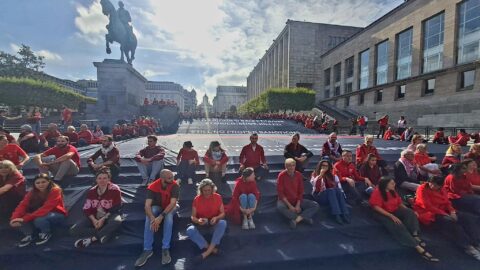
The incident reflects a growing trend among European organizations to monitor and challenge arms transfers connected to the Israeli occupation, amid intensifying global criticism of the war on Gaza and broader calls to end military support.
These efforts are part of wider campaigns led by rights groups and solidarity movements advocating for arms embargoes and accountability for companies complicit in sustaining Israeli military operations.
Political Pressure and Restrictions
At the same time, rights advocates report that several organizations engaged in this work in Belgium are facing increasing political pressure and restrictive measures, including funding cuts affecting a number of civil society groups.
Activists argue that these measures are intended to limit the growing impact of arms monitoring campaigns, which have increasingly exposed the role of European infrastructure in facilitating military supply chains linked to the Israeli occupation.
Between Policy and Popular Pressure
While this case does not indicate the existence of a comprehensive Belgian ban on military shipments, it demonstrates the expanding impact of legal advocacy and grassroots mobilization in disrupting such operations.
Observers suggest that repeated interventions of this kind could contribute to broader policy shifts across Europe, particularly as solidarity movements continue to intensify pressure to end complicity with the Israeli occupation.